
A message for those who feel they’re not “good enough” at healing

Have you ever left a counselling session thinking:
- “I should be making faster progress.”
- “I’m wasting time—I didn’t even cry.”
- “My counsellor probably thinks I’m not doing the work.”
If any of this sounds familiar, I want to gently tell you: you are not alone—and you are not doing counselling wrong.
In fact, these thoughts are often a sign that something very important is happening: an internal mode has shown up in the room with you. And that’s exactly where healing begins.
What Are Modes in Schema Therapy?
In Schema Therapy, we understand that different “parts” or modes of us can get activated at different times. These modes are patterns of emotion, thought, and behavior we developed early in life to survive emotionally overwhelming experiences.
Some modes protect us, some criticize us, and some try to overachieve or shut things down. All of them are trying to help—but not always in ways that actually support our healing today.
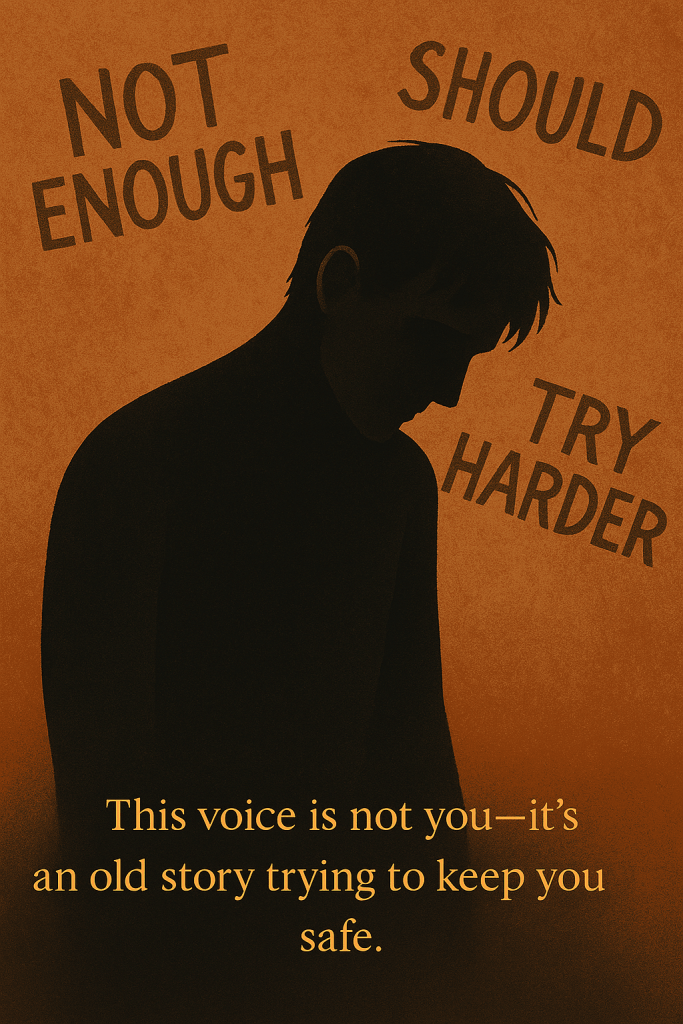
The Demanding Parent: The Inner Critic That Says “Not Enough”
One of the most common voices to show up in counselling is what we call the Demanding Parent mode. It is a harsh, critical voice that holds us to unrealistically high standards, often echoing messages we internalized from childhood.
You might hear it say:
- “You should be better by now.”
- “You’re wasting your counsellor’s time.”
- “You’re not opening up enough.”
This mode believes that being “good” will keep you safe or make you lovable. But instead of helping, it often leaves you feeling ashamed, tense, or defeated.
The Overcompensating Mode: The Perfectionist
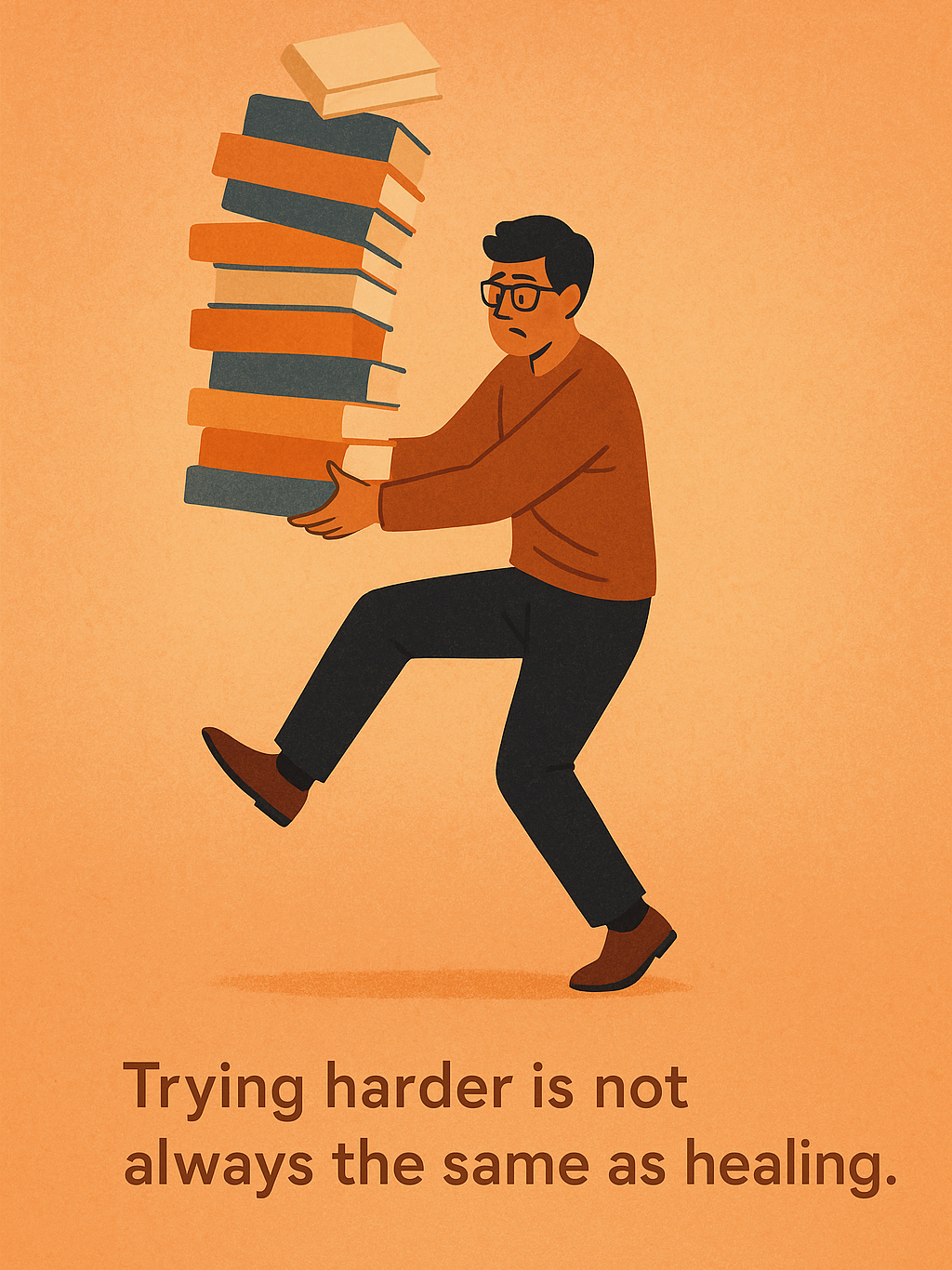
Other times, a different mode steps in: the Overcompensator. This part says, “If I just do counselling perfectly, maybe I’ll finally be okay.” It pushes you to work hard, analyze deeply, or always show up with “insightful” reflections—because slowing down or not knowing might feel terrifying.
This part is often doing everything it can to protect your more vulnerable side from being judged, dismissed, or hurt again.
When These Modes Take Over…
You might feel:
- Emotionally disconnected or pressured
- Afraid to be real, confused, or slow
- Like you need to “earn” your counsellor’s care
Counselling starts to feel like a performance—something to do right—instead of a space where your whole self is welcome, including the parts that feel messy, lost, or unsure.
Counselling Is Not a Test
Let me say this clearly: Counselling is not a test. It is not about getting the “right” answers or being a model client.
It is a space for your whole self. Not just the performing self. Not just the trying-hard self. But also the tired self. The discouraged self. The part that doesn’t know what to say.
You are not here to impress me. You are here to be supported.
What You Can Do When These Voices Show Up
- Notice the voice. You might say, “That sounds like my inner critic,” or “That’s my perfectionistic mode talking.”
- Slow down. You do not have to obey the pressure to be productive or perfect.
- Bring it into the session. This part of you deserves space in counselling too. It is trying to protect something—let’s get curious about what.
You’re Not Behind
Healing is not linear. There is no race, no gold star, no “right” timeline.
If you are showing up with honesty—even if you’re confused, even if you feel stuck—you are already doing the work. And that’s enough.
Some deeper schemas—such as unrelenting standards, failure, or subjugation—can also contribute to the intensity of these critical or perfectionistic experiences. They can shape how you relate to yourself and to the counselling process. I will explore this more fully in a future article.
With care and kindness,
Beatriz
 Melim Psychology and Coaching
Leave a comment