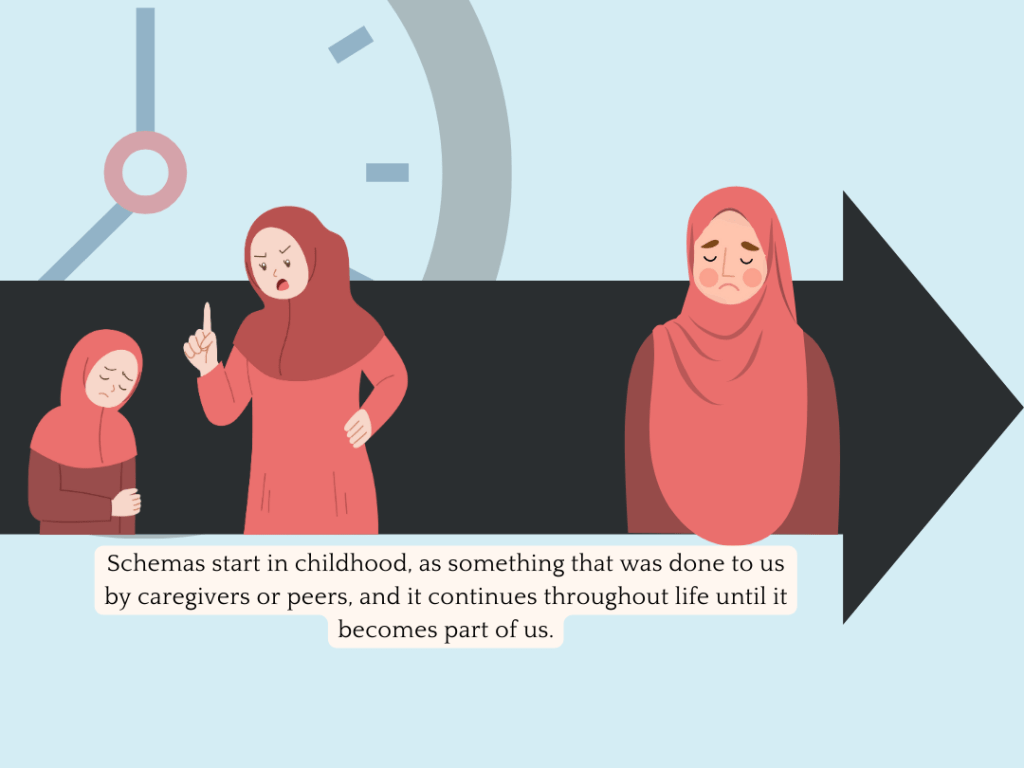
In this week’s feature, we will explore the concept of Early Maladaptive Schemas, a core concept for Schema Therapy. Schemas are “extremely stable and enduring themes, comprised of memories, emotions, cognitions, and bodily sensations, regarding oneself and one’s relationship with others, that develop during childhood and are elaborated on throughout the individual’s lifetime“1 (p.7).
Schemas start in childhood, as something that was done to us by caregivers or peers, and it continues throughout life until it becomes part of us. What this means is that, as we grow older, we tend to be influenced (and even unconsciously repeat) the conditions that were most destructive to us as children. This pattern may be damaging to all aspects of our lives, including our relationships with significant others and with ourselves, our work, and our health. The reason why these maladaptive schemas are so resistant is that, at some point, they were born out of a need to survive a harsh environment, they may restrict our opportunities to acquire new skills, to learn how to act in a different way, eventually, they become familiar and deep-rooted2.
Schemas were born out of a need to survive a harsh environment. These themes were realistic at some point when we were children but, eventually, they become too rigid and no longer serve their intended purpose, to help us survive. Eventually, they start limiting our lives.
People differ in what gets them to react emotionally, in a specific way. We all tend to have biases or tendencies on what we focus on, react to and how we tend to interpret our experiences, ourselves and the world around us.
Schemas are like lenses that are built into our mind’s eye. They filter all the information that comes in, about ourselves and about the world. We might pay more attention to and later remember things that support the schemas we hold and trivialise and forget information that is not consistent with them4. They are learned early in life and become part of our structure, they help us navigate the world as a compass, telling us right from wrong, and threatening from safe. They are comfortable and familiar, even when they are harmful and hurtful. This is why they are so difficult to change.
There are different ways to cope with schemas, we may believe and surrender to them, we may fight them or we may avoid them completely. I will go into these coping mechanisms in more detail, in the next article.
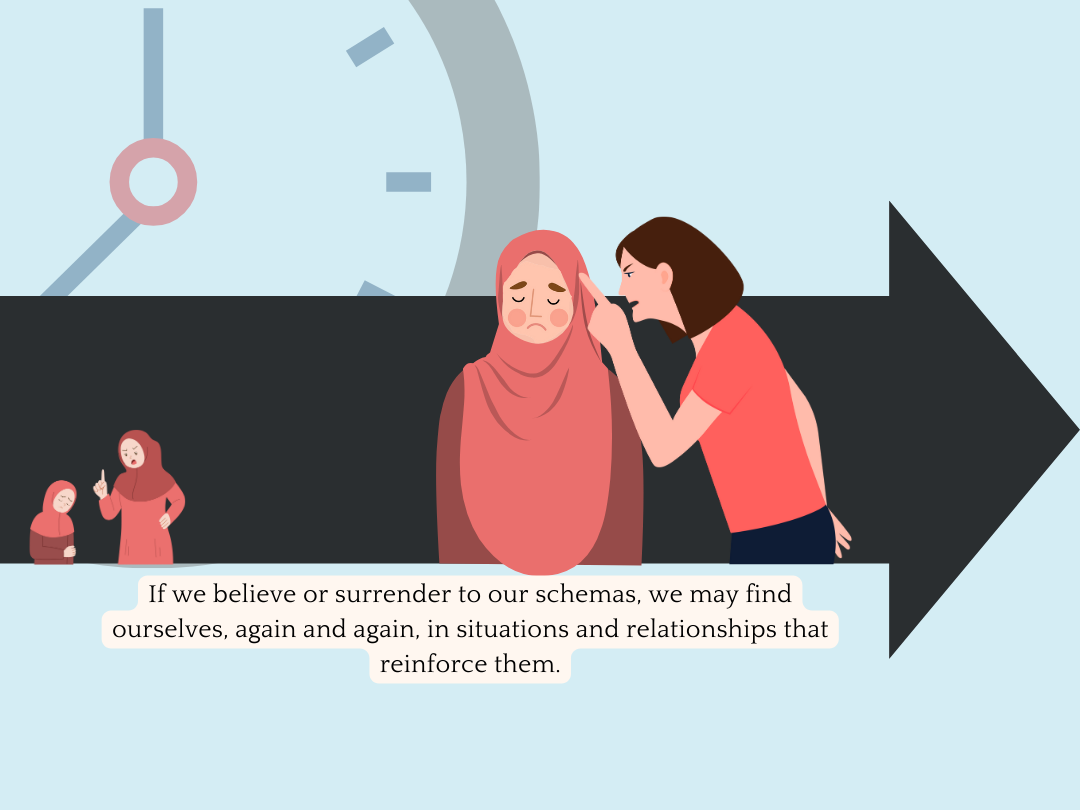
If we do believe and surrender to our schemas, we may find ourselves, again and again, in situations and relationships that convey the same destructive messages that we received from significant others growing up, thus confirming those very beliefs.
Which are the maladaptive schemas and how are they created?
The development of schemas is influenced by several factors, including our temperaments, “the way we are wired to respond to events”2 (p.24) and our environment, especially our relationship with caregivers and peers and significant life events. Currently, there are 18 Early Maladaptive Schemas which become rooted as a consequence of significant “shortfalls” (p.26) in meeting children’s most basic needs, what they need to become thriving adults. These needs are:
- Basic Safety
- Connection to Others
- Autonomy
- Self-Esteem
- Self-Expression
- Realistic Limits
The 18 early maladaptive schemas which originated from the lack of fulfilment of these core needs, are described in full detail by its precursors in classic publications such as “Schema Therapy: A Practioner’s Guide”1.
Here, I hope to introduce you to some of the most frequent schemas which are originated from the lack of fulfilment of the above needs:
Lack of Basic Safety: Abandonment and Mistrust Schemas
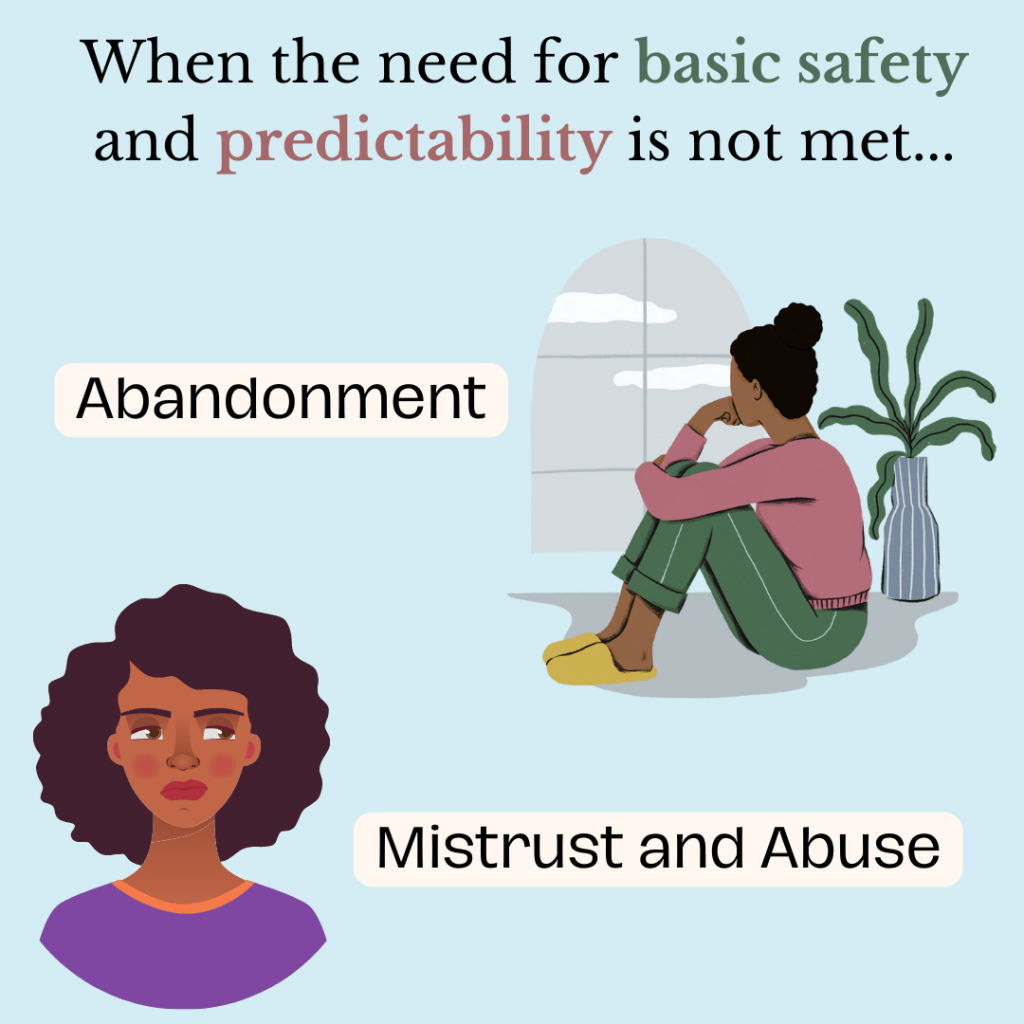
Sometimes the threat of neglect, abandonment and abuse comes from those who are closer to us, our principal caregivers. Children who suffered from that sort of lacking may become insecure, anxious and distrusting adults. They feel vulnerable and fragile, like at any moment they might get hurt, manipulated, abused or abandoned by those they love most.
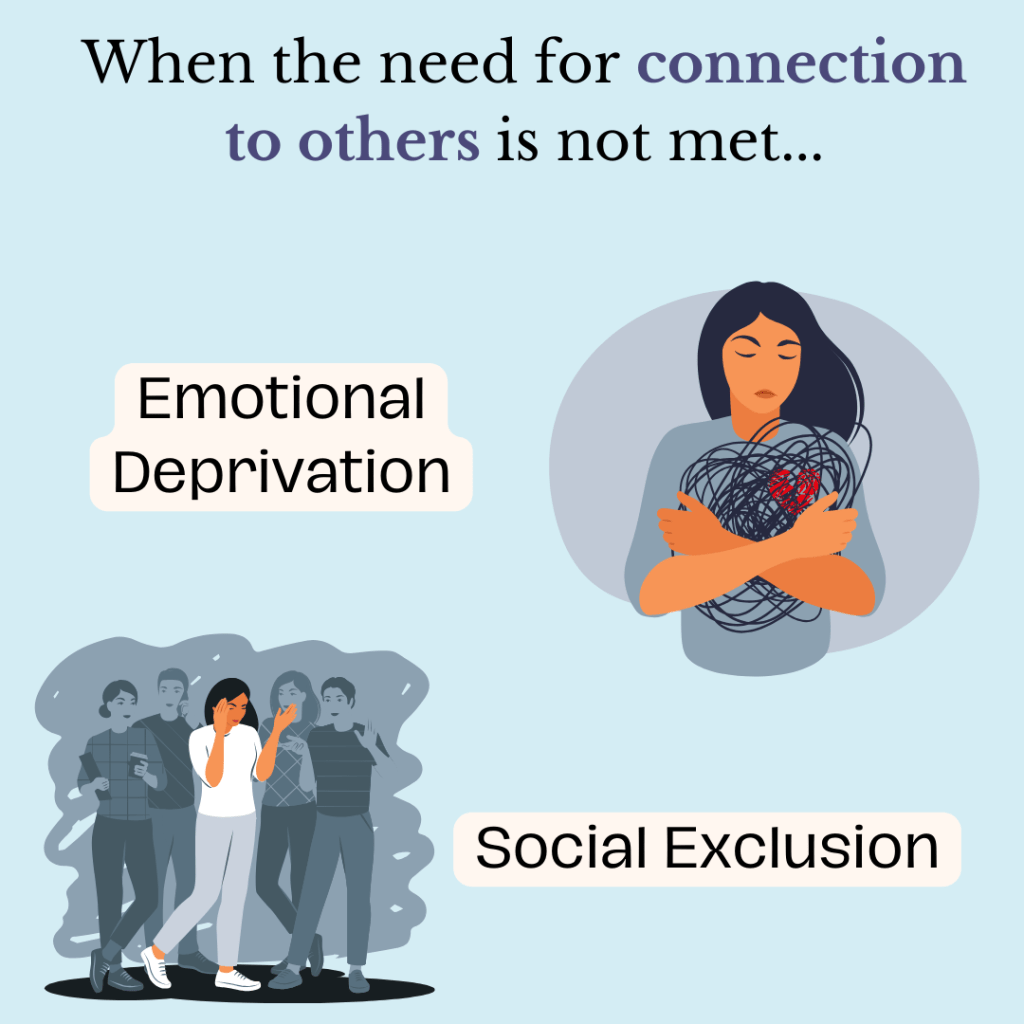
Lack of Connection to Others: Emotional Deprivation and Social Exclusion
It is important for children to develop a sense of connection, to feel loved, cared for, understood and respected by family and peers alike. The experience of disconnection from others, in either intimate family relationships or social interaction, may lead to a feeling of loneliness, emptiness and isolation from the world, and the perception that one will never be truly understood or cared for, in adulthood.
Lack of Independent Functioning: Dependence and Vulnerability
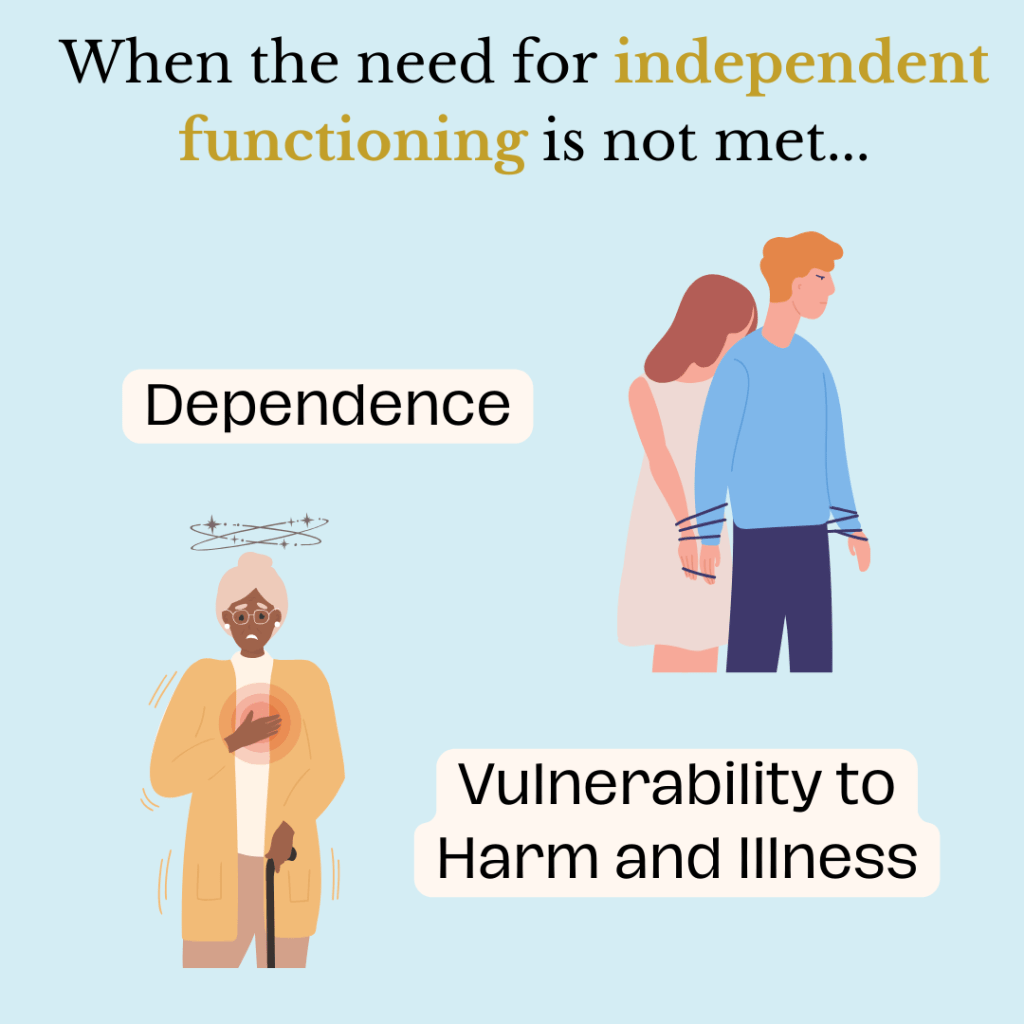
Sometimes the development of autonomy is undermined by an overprotective environment, one that is constantly warning about the dangers of the outside world and undermining one’s natural inclinations, judgment and capacity to make decisions. People growing up in this sort of environment may become scared adults, constantly doubting their own competence to take care of themselves and function in the world.
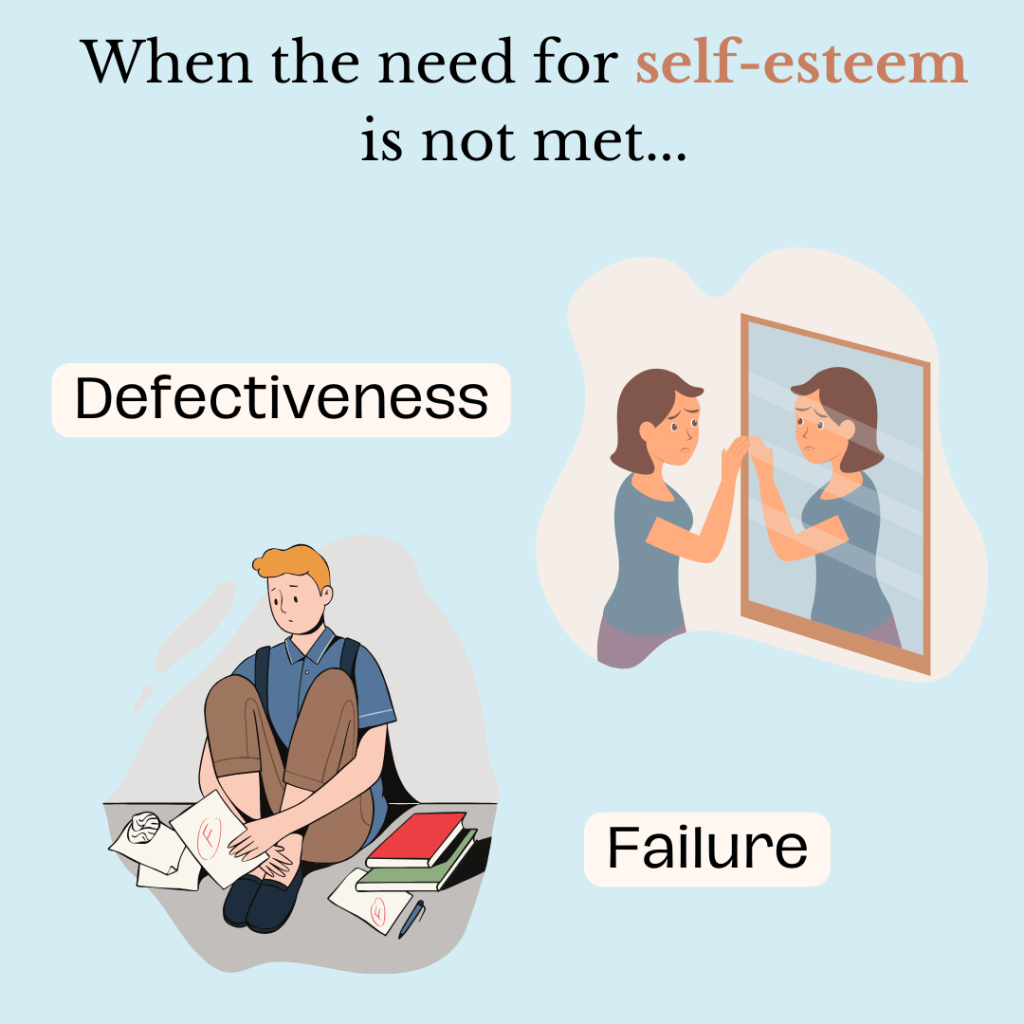
Lack of Self-Esteem: Defectiveness and Failure
When childhood environments fail to provide love, appreciation and encouragement, people may grow up feeling unlovable, undesirable or like a failure. As an adult, people may feel insecure about aspects of themselves and their lives and become hypersensitive to criticism and doubtful about whether someone can love them once they truly know them.
Lack of Self-Expression: Subjugation and Unrelenting Standards
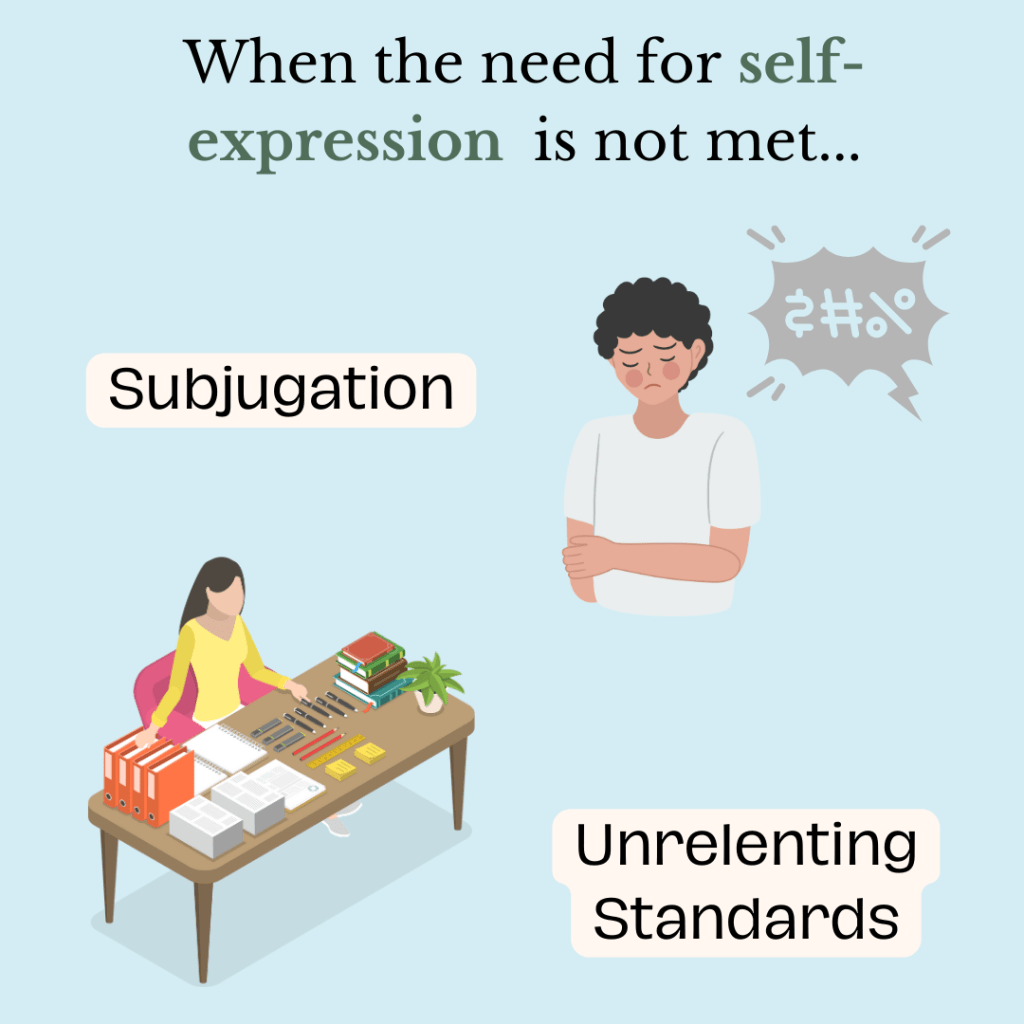
As children, it is important that we learn to validate and express our needs, feelings, and preferences. When significant others limit one’s self-expression by evoking feelings of guilt and shame, when caregivers’ needs precede those of the child, or when work and achievement are overemphasised, people may grow up to believe that they have to always be accommodating, overall controlled and inhibited, always prioritising other people’s needs ahead of their own.
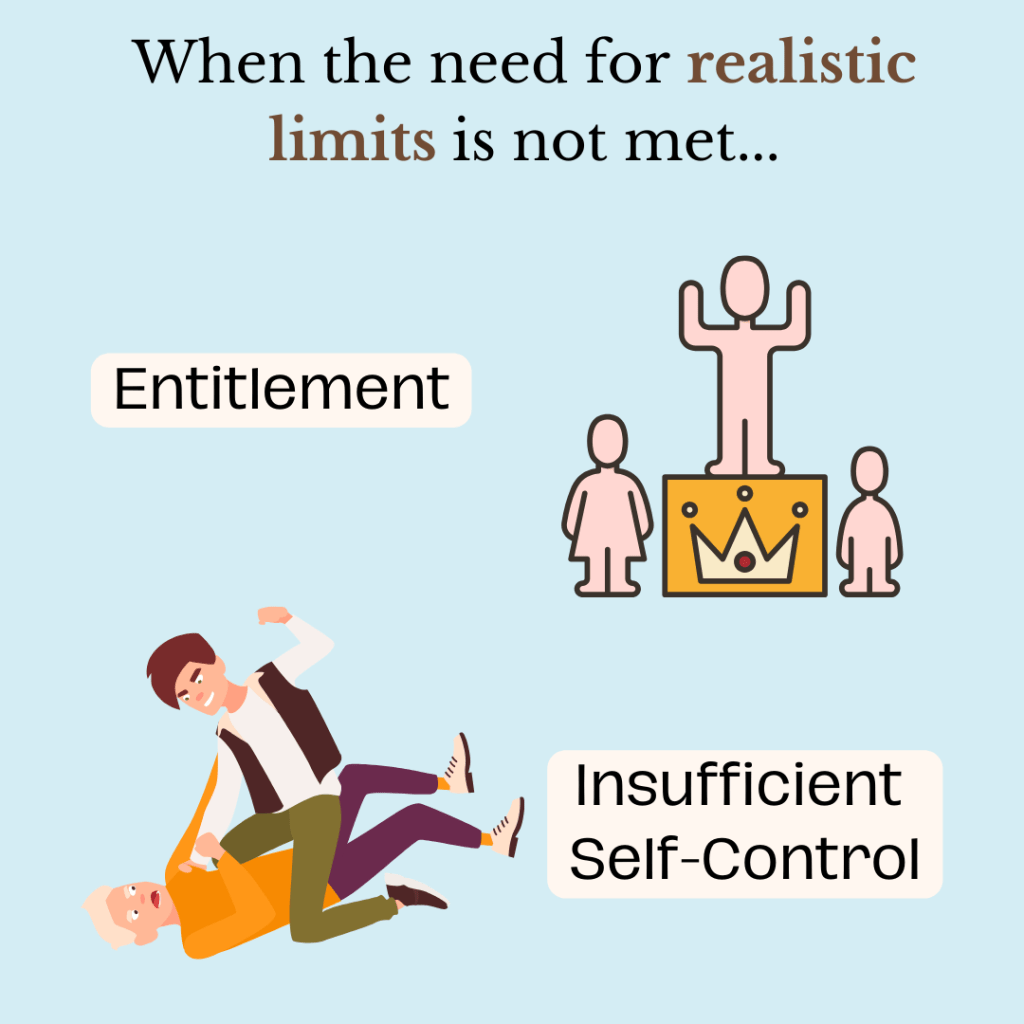
Lack of Realistic Limits: Entitlement and Insufficient Self-Control
As opposed to Self-Expression problems, an Entitlement schema usually originates in childhood environments that did not foster realistic limits, set appropriate consequences for behaviour or promote self-control and discipline. As adults, people may become too focused on their own needs, disregarding those of others. They may become selfish, demanding, controlling and narcissistic.
1Young, J. E., Klosko, J. S., & Weishaar, M. E. (2006). Schema therapy: A practitioner’s guide. Guilford Press.
2Young, J. E., & Klosko, J. S. (1994). Reinventing your life: The breakthrough program to end negative Behavior… and Feel great again. Penguin.
3Masley, S. A., Gillanders, D. T., Simpson, S. G., & Taylor, M. A. (2012). A systematic review of the evidence base for schema therapy. Cognitive Behaviour Therapy, 41(3), 185-202. https://doi.org/10.1080/16506073.2011.61427
4Leahy, R. L. (2017). Cognitive therapy techniques: A practitioner’s guide (2nd ed.). Guilford Publications.
Subscribe
Enter your email below to receive updates.
 Melim Psychology and Coaching
Leave a comment